
"coffee yield increase"
4000 article(s) found

How to change the meagre income of Coffee Farm Analysis on the trend of Coffee Farm
Following the recent Avance Coffee Sustainable Development Conference in Guatemala, the Professional Coffee Association issued a report analysing available public information on farm profitability and costs. The author makes a reliable meta-analysis of production data and cost data. Shockingly, they found only nine studies and publications from around the world, which they thought were acceptable.

Varieties and characteristics of Arabica Coffee
Arabica Coffee varieties and their characteristics Typica this is the closest Arabica species to the native species, almost all Arabica coffee varieties are derived from this. Used to be widely cultivated in Central and South America, the bean shape is long and has excellent sour taste and aroma, but it is not resistant to leaf rust and requires quite a lot of shading trees, resulting in low yield (sweet with bourbon every two years).

The flavor of Kenyan coffee manor is still strong. Introduction to Kenyan coffee.
On an international scale, the increase in the number of Kenyan coffee is obvious, with exports of 800000 bags in 1969-1970 and increased to 2 million bags in 1985-1986. The general yield is stable at 1.6 million bags, with an average yield of about 650kg per hectare. Even before coffee prices skyrocketed, the average price of coffee in Kenya had been rising. 1993 Murray-1994 price comparison of 12 months
Coffee treasures from the hometown of giant turtles, the Galapagos Islands
Boutique coffee beans must be excellent varieties, such as the original bourbon species, mocha species and Tippica species. The coffee beans produced by these trees have unique aroma and flavor, which is far from that of other tree species, but the relative yield is low. in recent years, in order to pursue the ability of disease and insect resistance and increase the yield, there have been many improved tree species, such as the massive promotion of high-yield rurial11 species in Kenya.

Detailed Analysis of four cultivation Systems of Ethiopian Fine Coffee
According to the following four different modes of production, Ethiopian coffee can be divided into nine major coffee producing areas, including five boutique coffee areas: Sidamo, Yegashefi, Harald, Lim and Lekampidi, and four general commercial bean producing areas: Gemma, Irugbagbo, Tibby and Bekaa. The sun or water washing methods are used in each district, and different treatment methods also affect the flavor.

Introduction to the Flavor of Iron pickup Coffee Arabica Iron Card Bourbon Coffee
Susceptible to rust, if the disease is not found and controlled in time, all the leaves will be lost within 10 days, resulting in a sharp decrease in yield or even no harvest; second, the size of the year is too obvious, the yield is higher in the big year, the yield is very low and unstable in the big year, and the grower's income is not guaranteed; third, although the quality of the cup is first-class, the selling price of raw beans is no different from that of other varieties.

Kenyan Coffee with Green Tea Flavor and Taste introduction to Fine Coffee in Manor area
On an international scale, the increase in the number of Kenyan coffee is obvious, with exports of 800000 bags in 1969-1970 and increased to 2 million bags in 1985-1986. The general yield is stable at 1.6 million bags, with an average yield of about 650kg per hectare. Even before coffee prices skyrocketed, the average price of coffee in Kenya had been rising. 1993 Murray-1994 price comparison of 12 months

A brief introduction to the Market Price of Coffee Bean Variety planting in Kenya Coffee Bean Manor in Africa with balanced acidity
Internationally, the increase in the number of Kenyan coffee is obvious. From 1969 to 1970, 800000 bags were exported, and from 1985 to 1986, exports increased to 2 million bags. Now the yield is stable at 1.6 million bags, with an average yield of about 650kg per hectare. Even before coffee prices skyrocketed in recent years, the average price of coffee in Kenya had been rising. Prices from 1993 to 1994

Black plum-flavored coffee in Kenya Jinchu Coffee Flavor Manor area characteristic planting situation Variety Jane
Internationally, the increase in the number of Kenyan coffee is obvious, from 1969 to 1970, when 800000 bags were exported, to 1985 and 1986, when the output increased to 2 million bags. Now the yield is stable at 1.6 million bags, with an average yield of about 650kg per hectare. Even before coffee prices skyrocketed in recent years, the average price of coffee in Kenya had been rising. Price ratio from 1993 to 1994: 12

Detailed Analysis of four cultivation Systems of Coffee in Ethiopia
Forest coffee (Forest Coffee): wild coffee, which accounts for 10% of Ethiopia's national output, is distributed in the wild coffee forest areas of the west and southwest, also known as the Kafa forest. The dense trees here provide the most natural shade for coffee trees and do not need manual care. Mother Earth is in charge of birth, aging, sickness and death, and coffee farmers can go directly to the woodland to harvest. Hansen

Wet treatment to make coffee drink clean and rich
Boutique coffee beans must be excellent varieties, such as the original bourbon species, mocha species and Tippica species. The coffee beans produced by these trees have unique aroma and flavor, which is far from that of other tree species, but the relative yield is low. in recent years, in order to pursue the ability of disease and insect resistance and increase the yield, there have been many improved tree species, such as the massive promotion of high-yield rurial11 species in Kenya.

What are the varieties of coffee beans? what are all the kinds of coffee beans?
Abyssinia (Abyssinia) was also introduced to Java in 1928. There are some plants in Indonesia. Acaia Arcadia is mainly grown in Brazil. This is derived from the natural cross of the Bourbon variety in Sumatra. Arabica (Arabica) is a large coffee variety category, also a coffee variety, about 75

Flavor description of Yunnan Tieka Coffee beans introduction to the characteristics and quality of the manor area
Flavor description of Yunnan Tieka Coffee beans introduction to the characteristics and quality of the manor production area so when Nestl é succeeded in popularizing new varieties with high yield in Pu'er area in the 1990s, brown farmers in Baoshan area also cut off old varieties and changed to new varieties one after another. with a round of coffee expansion, new varieties are increasing, old varieties are decreasing, and finally to today's situation: old varieties are almost

Introduction to the characteristics of Yunnan Tieka Coffee Flavor Flavor Manor
Tibika and Bobang coffee are the main cultivated varieties in Baoshan since the Yunnan Academy of Agricultural Sciences in 1951, and they are only planted in low-altitude areas below 1000 meters above sea level. They have won the gold medal internationally. The world's coffee (tooth sales plus) Blue Mountain Coffee is developed because of its low output (about 900 tons per year) and because its planting industry is supported by the Japanese.
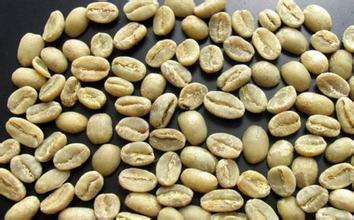
Detailed Analysis of four cultivation Systems in Coffee producing areas of Ethiopia
Forest coffee (Forest Coffee): wild coffee, which accounts for 10% of Ethiopia's national output, is distributed in the wild coffee forest areas of the west and southwest, also known as the Kafa forest. The dense trees here provide the most natural shade for coffee trees and do not need manual care. Mother Earth is in charge of birth, aging, sickness and death, and coffee farmers can go directly to the woodland to harvest. Hansen

Planting conditions, Environmental yield and quality of Coffee trees
Planting conditions, yield and quality of coffee tree transplanting seedlings: standard of transplanting seedlings: after the seeds are unearthed, the cotyledons have spread to the true leaves and the seedlings have not yet grown, because at this time, the seedlings have begun to work on the first or second round of lateral roots, and the growth is faster after transplanting seedlings, and before transplanting, the sand bed is drenched with water first. When raising seedlings, protect the root system as far as possible, and seedlings should be cut as soon as possible. And pay attention to keep the roots of the seedlings moist. Plant line spacing according to product

Rich taste Perfect Kenyan Jinchu Valley Coffee Flavor Taste Manor Features Fine coffee beans
On an international scale, the growth in Kenyan coffee production has been remarkable, with exports rising from 800,000 bags in 1969- 1970 to 2 million bags in 1985-1986. The average yield is stable at 1.6 million bags, with an average yield of about 650 kg/ha. Even before the coffee price spike, the average price of coffee in Kenya had been rising. 1993--1994 The annual price is 12 months.

Four major cultivation systems of Ethiopian coffee analyze in detail how Ethiopian coffee is cultivated.
Forest coffee (Forest Coffee): wild coffee, which accounts for 10% of Ethiopia's national output, is distributed in the wild coffee forest areas of the west and southwest, also known as the Kafa forest. The dense trees here provide the most natural shade for coffee trees and do not need manual care. Mother Earth is in charge of birth, aging, sickness and death, and coffee farmers can go directly to the woodland to harvest. Hansen

A brief introduction to the market price of Bolivian boutique coffee beans with dried almonds
Bolivia not only has a unique growing environment, but also has an excellent coffee variety Typica. In the past two hundred years, the main variety of coffee in Yanggas area is the ancient Tibica. Tibica coffee has a balanced and soft flavor, with lively aroma and rich sour taste. Unfortunately, the low production of Tibika and its poor disease resistance make Bolivia's